Government of Alberta: Justice Digital

Surrogate Digital redesign and Design System alignment
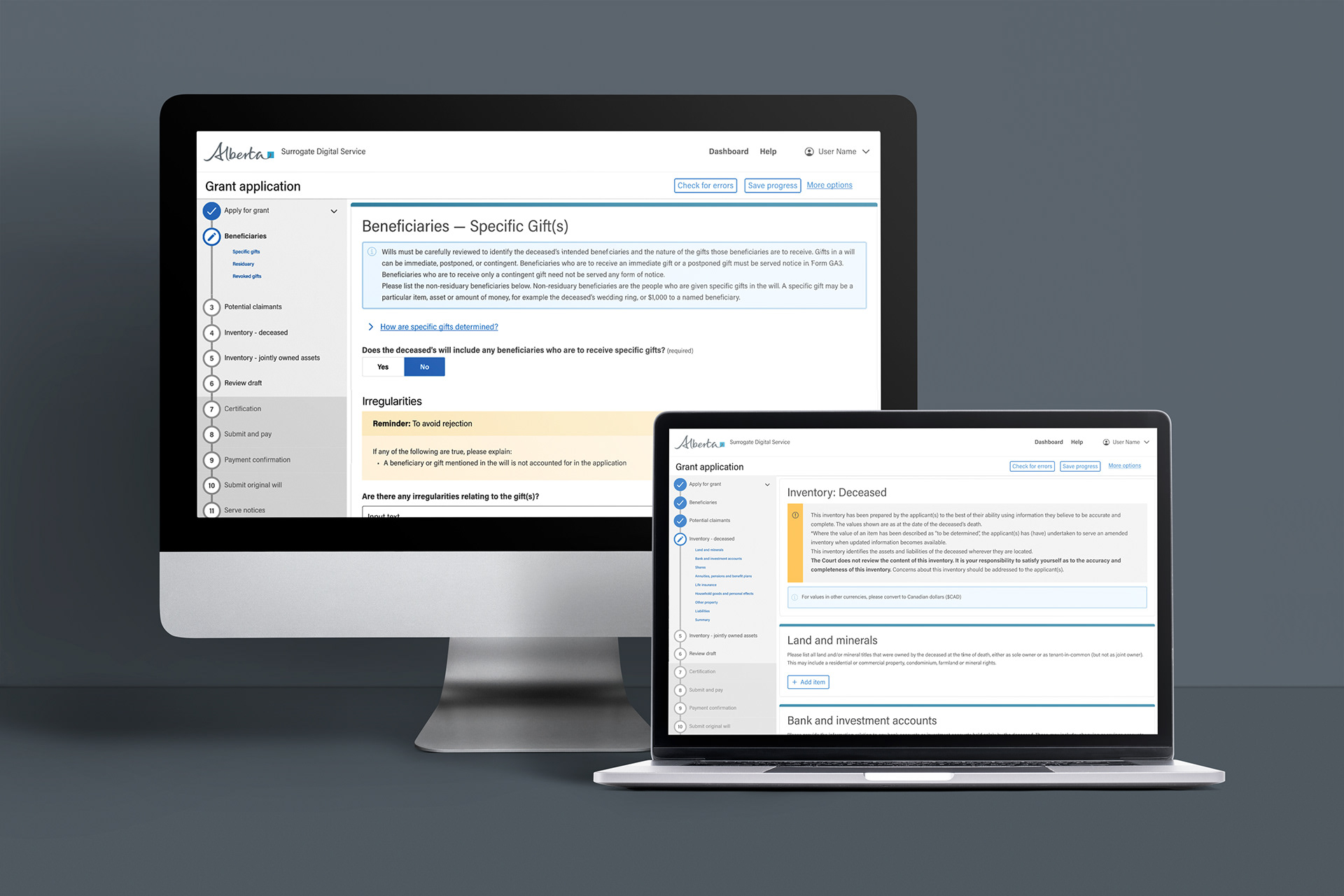
Surrogate Digital wesite

Project Overview

Client

The Digital Delivery and Innovation(DDI) office of the Government of Alberta works on innovation and problem-solving within the government system. They develop products that assist the government teams and they help support Albertan’s by creating simpler and more efficient services. 

Justice Digital is a department within the DDI and they focus on digital transformation and innovation within the Alberta Justice System. They create digital services for Albertans and work to make the Justice System more efficient and accessible to citizens.

Problem Statement

The GOA Design System is constantly growing and evolving. New digital services follow its new patterns and guidelines while previous services are not updated to align with these new updates to the system. This creates gaps in consistency across services.

Within the Government of Alberta there are many great tools and components available to aid users. Different elements/components can be used for similar cases. These can all be brought together as a pattern and have their individual usages defined so that their usages are consistent across all products and services.

The future of Justice Digital products will see public citizens as a user group. How can we create service patterns that allow for ease of use for users that are familiar with the legal system and its terminology as well as the public, who will not be as familiar?

My Role

  • UX Research 
  • Analyzing implementation of the Design System 
  • Creating recommendations based on my research
  • Creating UI flow, wireframes, and clickable prototypes
  • Building 'Helper Content' service patterns
  • Product Testing
  • Creating mockups of the Surrogate Digital Service

Timeline

Phase 1: Research August 2022 - January 2023

Phase 2: Development January 2023 - April 2023

Summary

Justice Digital provides a digital surrogate form to lawyers and legal assistants. They need additional helper content and patterns to assist users with varying degrees of knowledge about the form and legal terminology.

Creating these patterns will serve:

New users, users who don’t use the form very often and need reminders or help, and public citizens so that in the future they may be able to utilize integrated helper content and complete forms like this themselves.

As of April 2026 citizens are able to access and use the Surrogate Digital Service if they would like to represent themselves instead of applying with a lawyer.

Read full report
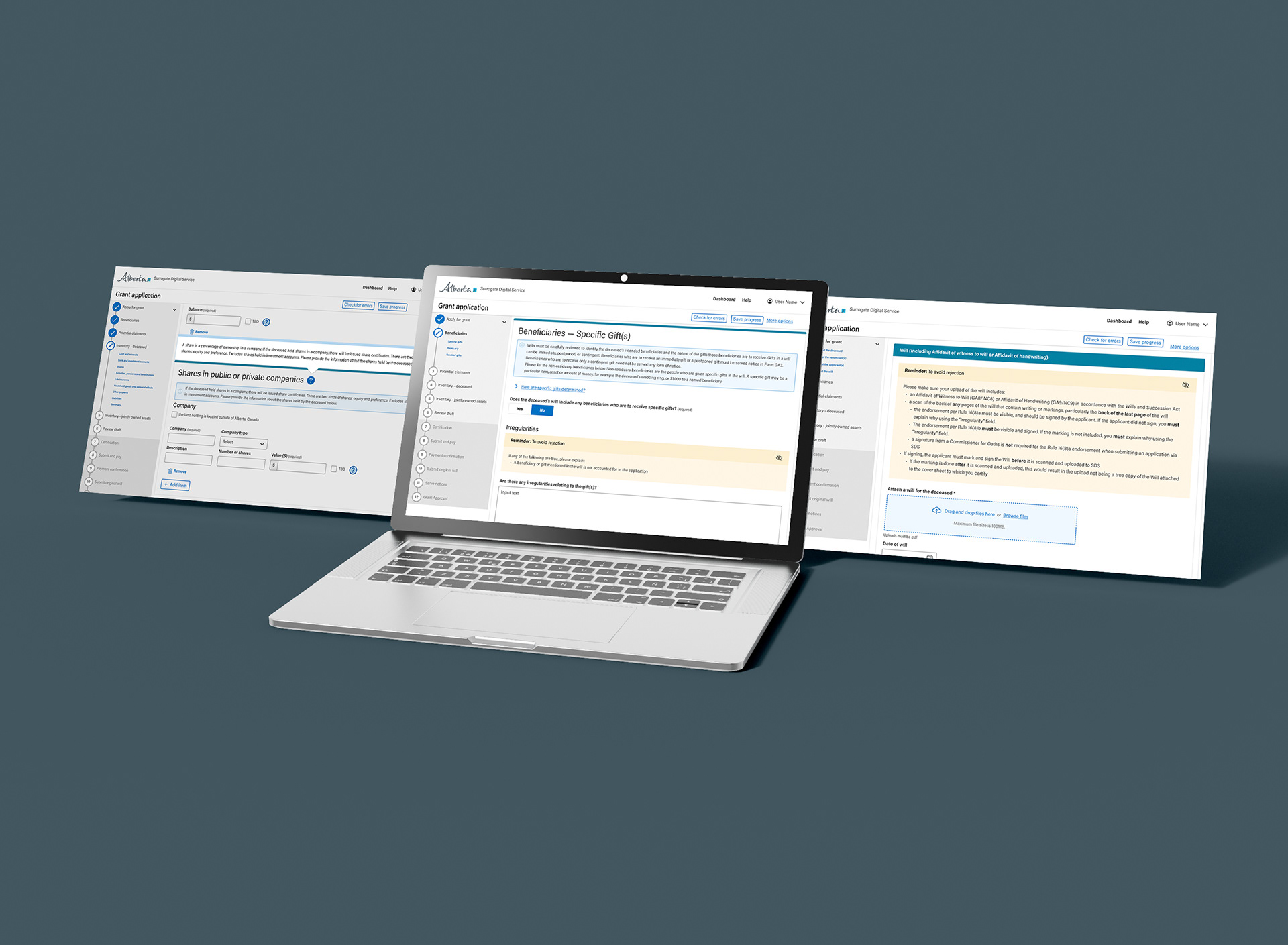
Form design for the Surrogate Digital website

Research

Heuristic Analysis

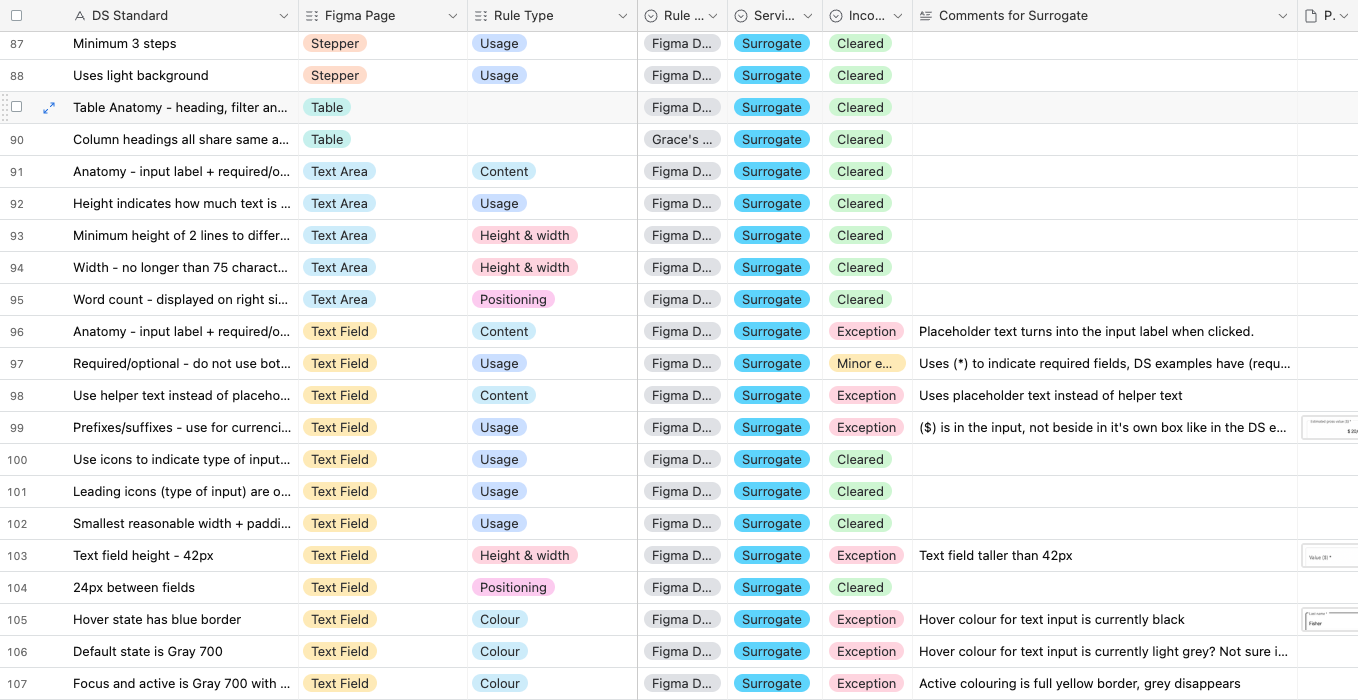
In the research phase of this project I conducted a heuristic analysis of 3 Justice Digital services. This Heuristic Analysis created a familiarity of the Design System and the content it contains. I became comfortable with government service patterns and their brand identity and utilized this in the development phase. Identifying exceptions within the services allowed me to highlight where there are potential gaps in the DS and its implementation.

This list of exceptions I created serves as an actionable list of updates that are needed in order to create consistency across all products. Justice Digital is now utilizing this list and they have added updating my highlighted exceptions to their to-do list. This analysis also led to the creation of a Design Debt Audit Framework for the Government of Alberta. And I was able to give my insight and previous research to the designer creating it and recommend how to take my analysis and expand upon it so it can be a tool utilized by not only Justice Digital but the entire Government of Alberta.
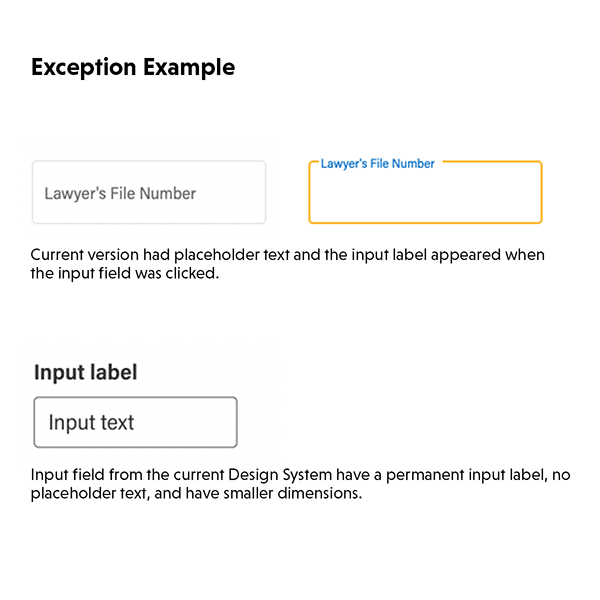
exception example of a input label
Table for identifying exceptions to the design system

Grace Zimmel

2026

All Rights Reserved

Government of Alberta: Justice Digital

Surrogate Digital redesign and Design System alignment

Surrogate Digital wesite

Project Overview

Client

The Digital Delivery and Innovation(DDI) office of the Government of Alberta works on innovation and problem-solving within the government system. They develop products that assist the government teams and they help support Albertan’s by creating simpler and more efficient services. 

Justice Digital is a department within the DDI and they focus on digital transformation and innovation within the Alberta Justice System. They create digital services for Albertans and work to make the Justice System more efficient and accessible to citizens.

Problem Statement

The GOA Design System is constantly growing and evolving. New digital services follow its new patterns and guidelines while previous services are not updated to align with these new updates to the system. This creates gaps in consistency across services.

Within the Government of Alberta there are many great tools and components available to aid users. Different elements/components can be used for similar cases. These can all be brought together as a pattern and have their individual usages defined so that their usages are consistent across all products and services.

The future of Justice Digital products will see public citizens as a user group. How can we create service patterns that allow for ease of use for users that are familiar with the legal system and its terminology as well as the public, who will not be as familiar?

My Role

  • UX Research 
  • Analyzing implementation of the Design System 
  • Creating recommendations based on my research
  • Creating UI flow, wireframes, and clickable prototypes
  • Building 'Helper Content' service patterns
  • Product Testing
  • Creating mockups of the Surrogate Digital Service

Timeline

Phase 1: Research August 2022 - January 2023

Phase 2: Development January 2023 - April 2023

Summary

Justice Digital provides a digital surrogate form to lawyers and legal assistants. They need additional helper content and patterns to assist users with varying degrees of knowledge about the form and legal terminology.

Creating these patterns will serve:

New users, users who don’t use the form very often and need reminders or help, and public citizens so that in the future they may be able to utilize integrated helper content and complete forms like this themselves.

As of April 2026 citizens are able to access and use the Surrogate Digital Service if they would like to represent themselves instead of applying with a lawyer.

Read full report

Form design for the Surrogate Digital website

Research

Heuristic Analysis

In the research phase of this project I conducted a heuristic analysis of 3 Justice Digital services. This Heuristic Analysis created a familiarity of the Design System and the content it contains. I became comfortable with government service patterns and their brand identity and utilized this in the development phase. Identifying exceptions within the services allowed me to highlight where there are potential gaps in the DS and its implementation.

This list of exceptions I created serves as an actionable list of updates that are needed in order to create consistency across all products. Justice Digital is now utilizing this list and they have added updating my highlighted exceptions to their to-do list. This analysis also led to the creation of a Design Debt Audit Framework for the Government of Alberta. And I was able to give my insight and previous research to the designer creating it and recommend how to take my analysis and expand upon it so it can be a tool utilized by not only Justice Digital but the entire Government of Alberta.

Table for identifying exceptions to the design system
exception example of a input label

Grace Zimmel

2026

All Rights Reserved

Government of Alberta: Justice Digital

Surrogate Digital redesign and Design System alignment

Surrogate Digital wesite

Project Overview

Client

The Digital Delivery and Innovation(DDI) office of the Government of Alberta works on innovation and problem-solving within the government system. They develop products that assist the government teams and they help support Albertan’s by creating simpler and more efficient services. 

Justice Digital is a department within the DDI and they focus on digital transformation and innovation within the Alberta Justice System. They create digital services for Albertans and work to make the Justice System more efficient and accessible to citizens.

Problem Statement

The GOA Design System is constantly growing and evolving. New digital services follow its new patterns and guidelines while previous services are not updated to align with these new updates to the system. This creates gaps in consistency across services.

Within the Government of Alberta there are many great tools and components available to aid users. Different elements/components can be used for similar cases. These can all be brought together as a pattern and have their individual usages defined so that their usages are consistent across all products and services.

The future of Justice Digital products will see public citizens as a user group. How can we create service patterns that allow for ease of use for users that are familiar with the legal system and its terminology as well as the public, who will not be as familiar?

divider line

My Role

  • UX Research 
  • Analyzing implementation of the Design System 
  • Creating recommendations based on my research
  • Creating UI flow, wireframes, and clickable prototypes
  • Building 'Helper Content' service patterns
  • Product Testing
  • Creating mockups of the Surrogate Digital Service

Timeline

Phase 1: Research August 2022 - January 2023

Phase 2: Development January 2023 - April 2023

divider line

Summary

Justice Digital provides a digital surrogate form to lawyers and legal assistants. They need additional helper content and patterns to assist users with varying degrees of knowledge about the form and legal terminology.

Creating these patterns will serve:

New users, users who don’t use the form very often and need reminders or help, and public citizens so that in the future they may be able to utilize integrated helper content and complete forms like this themselves.

As of April 2026 citizens are able to access and use the Surrogate Digital Service if they would like to represent themselves instead of applying with a lawyer.

Read full report

Form design for the Surrogate Digital website

Research

Heuristic Analysis

In the research phase of this project I conducted a heuristic analysis of 3 Justice Digital services. This Heuristic Analysis created a familiarity of the Design System and the content it contains. I became comfortable with government service patterns and their brand identity and utilized this in the development phase. Identifying exceptions within the services allowed me to highlight where there are potential gaps in the DS and its implementation.

This list of exceptions I created serves as an actionable list of updates that are needed in order to create consistency across all products. Justice Digital is now utilizing this list and they have added updating my highlighted exceptions to their to-do list. This analysis also led to the creation of a Design Debt Audit Framework for the Government of Alberta. And I was able to give my insight and previous research to the designer creating it and recommend how to take my analysis and expand upon it so it can be a tool utilized by not only Justice Digital but the entire Government of Alberta.

Table for identifying exceptions to the design system
exception example of a input label